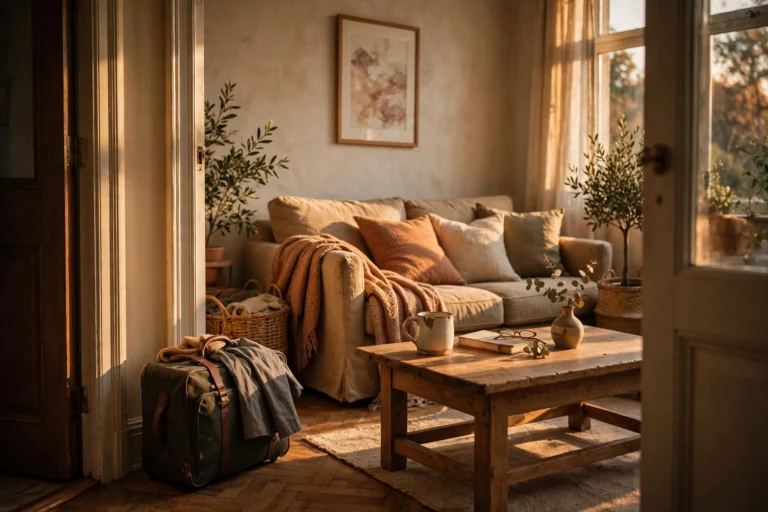

Why Your Home Feels Colder Than the Thermostat Says
The thermostat says 72. You are wearing a sweater, wrapped in a blanket, holding a mug of tea like it is a tiny space heater — and you are still cold. You walk over and stare at the little glowing number as if it personally betrayed you. You nudge it up to 74. Ten minutes later, nothing has changed except your heating bill.
Here is the strange truth: your thermostat is not lying, exactly. It is just answering a different question than the one you are asking. It measures the temperature of the air in one small spot on one wall. Your body, meanwhile, is measuring something much more complicated — and your house is quietly working against you in ways you never notice.
Your Thermostat Lives in the Warmest Spot in the House
Thermostats are usually mounted in a hallway or a central room, often at chest height, often on an interior wall. That is the most sheltered, most stable spot in the entire house. It is the one place least affected by drafts, windows, and cold floors.
You, on the other hand, are sitting on a couch against an exterior wall, three feet from a window, with your feet on a cold floor. The air around the thermostat might genuinely be 72 degrees. The air around you might be 66. The thermostat has no idea. It is like judging the weather by standing inside a closet.
This is also why turning the heat up rarely fixes the feeling. The hallway gets warmer, the thermostat gets satisfied sooner, and the system shuts off — while your corner of the living room is still shivering.
Cold Walls Are Quietly Stealing Your Body Heat

Here is the part nobody tells you: you do not only lose heat to cold air. You lose it to cold surfaces, too. Your body is constantly radiating warmth outward, like a small radiator. When you sit near a cold wall or a big window, that wall absorbs your radiated heat — even if the air in the room is perfectly warm.
Scientists call this radiant heat loss, but you have felt it your whole life. It is why a room can feel chilly even when the air is fine, and why sitting near a window on a winter night feels like sitting next to an open fridge. Your body is literally warming the wall.
Old windows are the worst offenders. A single-pane window in January can be almost as cold as the outdoors, and it will happily drink the warmth right off your skin from several feet away. Double glazing helps enormously — and so does something much simpler: a thick curtain, closed at night, puts a blanket between you and the cold glass.
The Draft You Cannot See
Most homes leak air in places you would never think to look. Around window frames. Under doors. Through the gap where the pipes come in. Through the attic hatch, the fireplace, the electrical outlets on exterior walls. On a windy day, your house is quietly exchanging its warm air for cold outdoor air, all day long.
And here is the sneaky part: cold air sinks. So even a small leak near the ceiling lets warm air escape upward while cold air pours in low, pooling around your ankles. That is why your feet are always cold first. Your head might be in 72-degree air while your toes are standing in a 60-degree puddle of it. Warm air rises and escapes through the top of the house, and cold air gets sucked in at the bottom to replace it. Your house is breathing, and in winter, every breath costs you warmth.
Dry Winter Air Makes Everything Feel Colder
Winter air is dry air. Cold outdoor air holds very little moisture, and when your heating system warms it up, the relative humidity drops even further — sometimes to desert levels. And dry air feels colder than humid air at the exact same temperature.
Part of it is evaporation: moisture evaporates off your skin faster in dry air, and evaporation cools you down. Part of it is comfort: dry air dries out your nose, your throat, and your skin, which makes you feel generally miserable in a way your brain files under “cold.”
This is why a house at 70 degrees with decent humidity can feel cozier than a house at 73 with bone-dry air. A small humidifier in the bedroom is one of the cheapest comfort upgrades in existence — and it lets you turn the thermostat down a degree or two without feeling any colder.
Practical Takeaways
- Trust your body, not the thermostat: it measures air in one sheltered spot, not the cold corner where you actually sit.
- Close curtains at sunset: a thick curtain over a window stops radiant heat loss and can make a room feel several degrees warmer.
- Block the drafts you can feel: run your hand along window frames, doors, and outlets on a windy day; seal what you find with weatherstripping or a draft stopper.
- Warm the floor, warm the person: a rug over bare floors and warm socks do more for comfort than two extra degrees on the dial.
- Add a little humidity: a small humidifier makes winter air feel warmer and stops the dry-skin, dry-throat misery that reads as cold.
- Move away from the cold wall: shifting your chair or bed even a foot away from an exterior wall or big window cuts radiant heat loss immediately.