Why One Lit Window Can Make a Whole Street Feel Safer in December
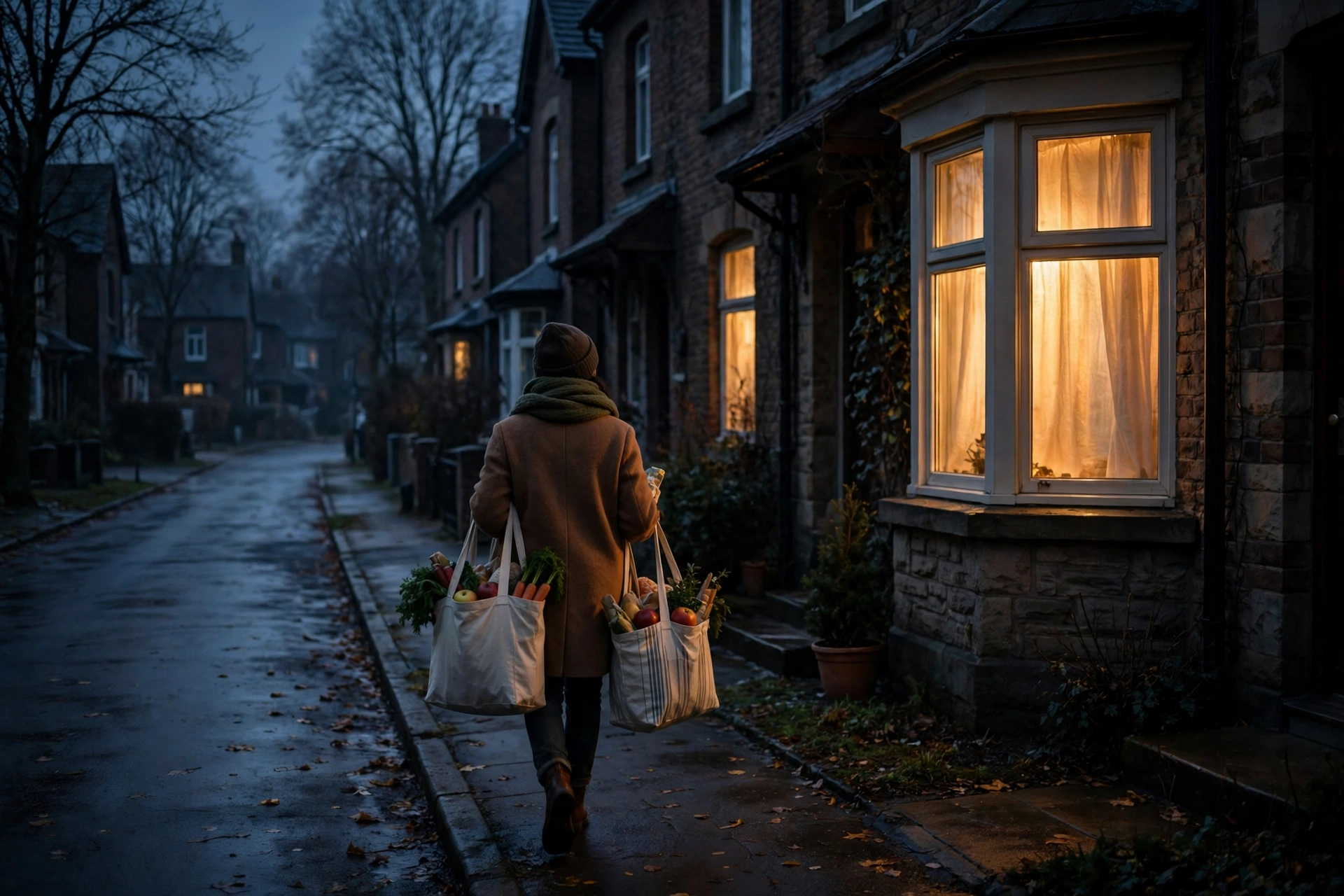
It is only 5:30 in the evening, but December has already turned the sky dark. You are walking home with groceries bumping against your leg, your breath showing in the cold, and every house looks closed up and quiet. Then you turn the corner and see it: one warm window glowing behind a curtain, a lamp on, the soft shape of someone moving inside.
Nothing dramatic has happened. No one has waved. And yet your shoulders drop, your steps feel less hurried, and the whole street feels a little less empty. That change is not your imagination. It is what a single lit window tells your brain in the darkest month of the year.
December Darkness Changes How a Street Feels
In summer, a street at 7 p.m. still feels awake. You can see faces, yards, dogs being walked, and neighbors watering plants. In December, that information disappears early. Houses become dark shapes, sidewalks lose detail, and even a familiar block can feel anonymous.
Your brain does not like missing information after dark. When you cannot easily read a place, you stay more alert: you listen harder and notice every sound. That vigilance is normal, but it is tiring, which is why a dark street can feel longer than the same street in June.
A lit window gives your brain one clear piece of information back: life is happening here. That single signal can soften the whole scene.
Your Brain Reads Warm Light as “Someone Is Home”
Not all light feels the same. A harsh floodlight can make a driveway look like a parking lot, but a warm lamp behind a window sends a different message. It suggests a room, a routine, and a person nearby who would notice if something sounded wrong outside.
That is the quiet psychology of being watched over without being watched. You do not need to know the neighbor, or even see them clearly. The glow implies presence, and presence is one of the oldest safety cues humans have. Long before streetlights, a fire in the dark meant people and warmth. A December window taps into that same feeling, just with better curtains.
This is why one window can matter more than a row of bright decorations. Twinkling lights are cheerful, but a lived-in glow feels inhabited. It says the house is not just decorated.
Someone is actually there, living an ordinary evening.
One Window Becomes a Landmark
In a dark street, your brain grabs onto landmarks: the house with the blue door, the corner tree, the window always lit at dinnertime. Once a window becomes a landmark, it organizes the street around it. The block feels less like a stretch of darkness and more like a place with a center.
Knowing where you are in relation to that light makes you feel more in control, and that sense of orientation is a big part of feeling safe, even when the actual risk has not changed.
It works in reverse, too. When a usually lit house stays dark for several December nights, people notice. Neighbors wonder if the family is traveling or unwell. The missing light becomes information because the lit window had quietly become part of how the street understood itself.
The Quiet Signal Neighbors Send Each Other
A lit window is also a small social signal: “We are here tonight.” Over a winter, those signals add up. A block where several homes glow at different hours feels lived in and loosely connected, even if the neighbors rarely speak.
That loose connection matters. People who feel their street is inhabited tend to walk a little more, notice a little more, and look out for each other more naturally. A porch light left on, a kitchen bright while dinner cooks, a reading lamp in a front room — none are security systems, but together they create the feeling that the street is awake enough to care.
December makes that feeling precious. It is the month of early nights and closed doors. A warm window pushes back against both, without anyone having to organize anything.
Why Warm Beats Bright
If light helps, why not make everything brighter? Because safety is not only about visibility. It is also about comfort, and harsh lighting can make a place feel exposed rather than protected. Glare creates deep shadows at the edges, which can make the rest of the street feel darker by comparison.
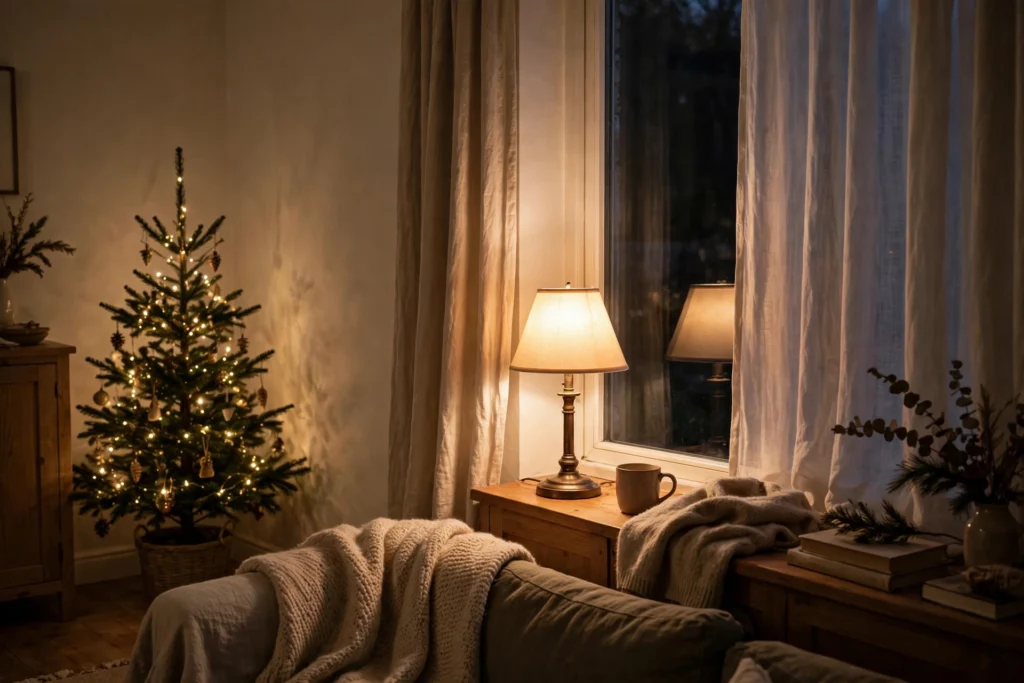
Warm, modest light softens contrast and shows the shape of a home without turning it into a stage. That is why the coziest December streets are rarely the brightest. They are the ones where life shows at a human scale: a lamp, a tree in the corner, a kitchen in use.
You do not need a display to create that effect. The most reassuring window on the street is often the most ordinary one.
Practical Takeaways
- Use warm light in a front-facing room: A warm lamp in a living room or kitchen signals presence far better than a dark house.
- Keep one evening light predictable: A window lit around the same time each night becomes a comforting landmark.
- Choose warm over harsh: Soft indoor glow feels inhabited, while glaring lights create uncomfortable contrast.
- Let ordinary life show a little: A tree, curtain glow, or kitchen in use says the home is lived in, not just decorated.
- Notice your own street: The windows you rely on for comfort are probably the ones your neighbors quietly appreciate from yours.