

How to Host a Holiday Without Losing Your Mind: The 48-Hour Game Plan
Somewhere between the fourth trip to the grocery store and the moment you realize you bought cranberry sauce but forgot the cranberries, a thought crosses every holiday host’s mind: never again.
And yet next year, there you are, volunteering again. Because gathering everyone under your roof feels worth it — as long as you are not crying into the gravy when they arrive.
Experienced hosts learn one truth: a smooth holiday is not about talent or a bigger kitchen. It is about timing. Everything that feels impossible on the day of becomes easy if you steal it from two days before.
The Real Enemy Is the Pile-Up, Not the Work
Ask anyone who has hosted and they will tell you the day itself was not that bad. The nightmare was the pile-up: the turkey that needed thawing, the bathroom that needed cleaning, the appetizers that needed assembling, and the doorbell ringing — all in the same hour.
Hosting does not fail because there is too much to do. It fails because everything lands at once. The 48-hour game plan works because it spreads the work across three days, so no single day feels like a disaster. The secret is doing the right things at the right time, in the right order.
Day Minus Two: The Invisible Work
Two days out, nothing looks like hosting. No cooking, no decorating marathons — just lists and zones, the most powerful part of the plan.
First, write the real guest list — not the fantasy one — and count heads for food, chairs, and plates. Then walk through your home like a guest who has never been there. The hallway light bulb, the bathroom hand towel, the top of the fridge: this is the day to notice.
Clean in zones, not in a panic spiral. One bathroom fully done beats three rooms half-cleaned. Wash the guest towels and the tablecloth now, while there is still time for them to dry. Put spare phone chargers in a basket by the couch and you will look like a genius.
Most importantly: plan the menu around what can be made ahead. Every dish that can be assembled or cooked two days early is a gift to your future self. The best hosts are not the ones who do everything the day of — they are the ones who did half of it before anyone was watching.
Day Minus One: Cook Ahead, Clean Smart
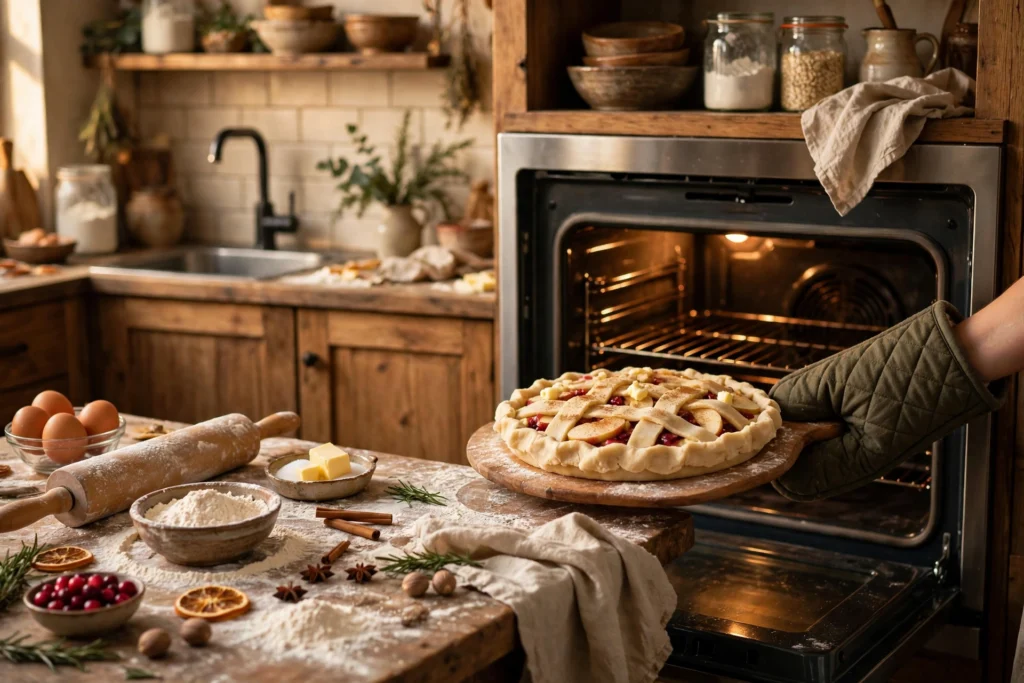
The day before is cooking day, and the rule is simple: if it can be made today, make it today. Casseroles, pies, cranberry sauce, dips — all of it tastes better after a night in the fridge anyway. This is not cutting corners; it is how restaurants do it.
While things bake, do the second wave of cleaning: floors, mirrors, the entryway. Set the table tonight, not tomorrow morning. Lay out serving dishes with little sticky notes saying what goes in each one — your tomorrow-self, mid-chaos, will be grateful.
Then do the thing most hosts skip: stop. Close the kitchen, take a walk, go to bed at a reasonable hour. A rested host is a better host than one who stayed up until 2 a.m. polishing silverware nobody will notice.
The Day Of: Work the Timeline, Not the Panic
On the big day, forget the giant to-do list. Work a timeline instead — just three checkpoints.
Morning: get the main dish in, tidy the living areas, and shower before noon. Hosts who shower early feel like different people by 3 p.m. Put on real clothes and the whole day feels more under control.
Afternoon: finish the last dishes, set out drinks and one simple appetizer, and light a candle in the entryway. When the first guests arrive, greet them with a drink in your hand — not a whisk. The first ten minutes set the tone, and the tone you want is “I am so glad you are here,” not “do not touch anything.”
Thirty minutes before everyone sits down, do a five-minute reset: clear the counters, empty the trash, wipe the bathroom sink.
The Real Secret: Hosts Are Allowed to Have Fun
Here is the part nobody puts in the hosting guides: you were invited to this party too. The host who disappears into the kitchen for four hours misses the whole point of gathering everyone.
So build yourself into the plan. Sit down for the meal. Accept the glass of wine someone offers. Let someone else bring dessert — and when they do, say thank you instead of apologizing that you did not make it yourself.
Nobody remembers whether the napkins matched. They remember whether you were relaxed enough to laugh with them. A slightly lopsided pie served by a happy host beats a flawless spread served by a stressed one, every single time.
Practical Takeaways
- Start 48 hours out. Two days of light work beats one day of panic — the pile-up, not the workload, is what breaks hosts.
- Cook what you can the day before. Casseroles, pies, sauces, and dips all taste better after a night in the fridge.
- Set the table tonight, not tomorrow morning. Sticky notes in each serving dish save your sanity on the day.
- Shower and dress before noon. Feeling put-together changes how the whole afternoon feels.
- Greet guests with a drink, not a task. The first ten minutes set the tone — be present, not frantic.
- Let yourself enjoy it. Sit down, eat the food, laugh at the stories. A relaxed host is the best decoration in the room.