
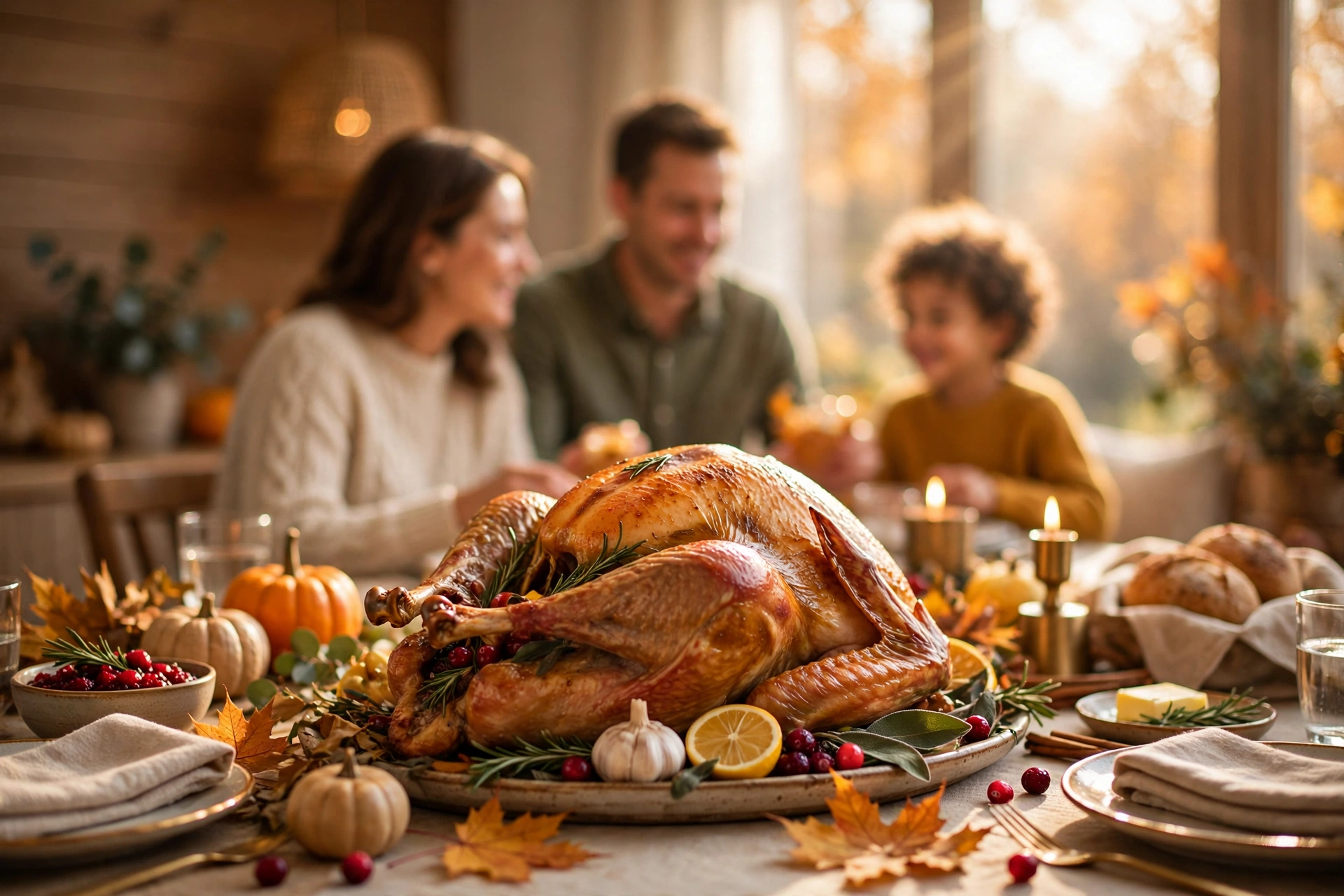
The Thanksgiving Day Timeline That Saves Your Sanity (and Your Turkey)
It is 2 p.m. on Thanksgiving Day. The turkey is somehow both raw and burnt. The mashed potatoes are cold, the gravy has formed a skin, and three different relatives are asking when dinner will be ready — as if you have a crystal ball and not a kitchen that smells faintly of smoke. You smile. You say, “Soon!” You have absolutely no idea what “soon” means.
Now imagine the exact same day, but different. The turkey rests peacefully. The potatoes are hot. You are sitting down, glass in hand, actually talking to your family instead of sprinting between the oven and the sink. The difference between these two Thanksgivings is not luck, talent, or a bigger kitchen. It is a timeline — a simple plan that does the panicking for you, hours before the panic would normally start.
The Real Enemy Is Not the Turkey
Most Thanksgiving disasters are not cooking disasters. They are timing disasters. Every dish wants the oven at a different temperature at the same moment. Every side dish finishes at a different time. And the cook — you — is expected to somehow be in four places at once while also looking relaxed.
Professional chefs solve this with one tool: a schedule written down before the day begins. Not a vague idea. An actual list, on paper, that says what happens at 9 a.m., at noon, at 3 p.m. When the plan is written down, your brain stops juggling. It just follows the next line. That is the whole secret, and it is embarrassingly simple.
Work Backwards From Dinner Time

Start with the only number that matters: when do you want to sit down and eat? Let’s say 4 p.m. Now walk backwards.
The turkey needs about 30 minutes to rest after it comes out of the oven — and resting is not optional, it is what makes the meat juicy instead of dry. So the turkey must leave the oven by 3:30. A typical turkey needs roughly 15 minutes per pound at 325 degrees, which means a 14-pound bird needs about three and a half hours. So it goes in at noon. Just like that, the scariest part of the day has a time slot, and it is not a mystery anymore.
Now do the same for everything else. The stuffing can bake while the turkey rests. The green beans take 20 minutes. The rolls take 15. The cranberry sauce was made yesterday — because the smartest Thanksgiving trick of all is that half the meal can be cooked the day before.
The Night Before Is Half the Meal
Here is where calm Thanksgivings are really made: the evening before. Chop the onions. Peel the potatoes and leave them in cold water. Make the cranberry sauce, the pie, and the salad dressing. Set the table. Lay out the serving dishes with little sticky notes saying what goes in each one, so you are not hunting for the right bowl with gravy on your hands.
None of this is glamorous. None of it will impress anyone. But when you wake up on Thanksgiving morning and half the work is already done, you will feel like a different person — the relaxed host in the movies, instead of the frazzled cook in the memes.
Build In Buffers, Not Just Tasks
Every timeline needs breathing room. If the turkey is supposed to be done at 3:30, plan for 3:15 and let it rest a little longer — resting only makes it better. If dinner is at 4, tell the family 4:30 and serve at 4. A timeline with no slack is just a list of disappointments waiting to happen.
And give yourself one sacred rule: at 30 minutes before dinner, you stop cooking. You change your shirt, wash your hands, pour yourself something to drink, and sit down for five minutes. The food will survive. The oven will survive. You are the only part of this operation that cannot be reheated.
The One-Hour Rule That Changes Everything
If you remember nothing else, remember this: from one hour before dinner, nothing new goes into the oven. That last hour belongs to reheating, resting, and plating — the calm jobs. The frantic jobs are finished. When guests arrive and ask if they can help, you can honestly say, “Everything is under control,” and mean it — because the timeline handled the chaos hours ago.
Thanksgiving is supposed to be about gratitude, not endurance. A timeline does not take the magic out of the day. It takes the panic out, and leaves the magic standing there, warm, on time, and ready to eat.
Practical Takeaways
- Pick your dinner time first — then work backwards: turkey out 30 minutes before, in the oven 15 minutes per pound before that.
- Cook half the meal the night before — cranberry sauce, pies, chopped vegetables, and set the table so morning starts calm.
- Write the timeline on paper — a written schedule frees your brain from juggling and turns panic into following the next line.
- Label your serving dishes — sticky notes on empty bowls mean no hunting for the right dish with gravy on your hands.
- Build in buffers — plan the turkey done 15 minutes early and tell guests a slightly later time; resting only makes it better.
- Stop cooking 30 minutes before dinner — change, breathe, sit down; the last hour is for reheating and plating, nothing new goes in the oven.