

Why the First Bite of Thanksgiving Dinner Always Tastes Like the Best One
At Thanksgiving dinner, someone takes the first bite — maybe turkey with gravy, maybe the stuffing they have thought about since October — and for one perfect second, nothing else exists. That single bite tastes like the holiday itself.
Then the second bite arrives. It is still good, but the magic has softened. The food has not changed; the feeling has. The reason is hiding in how your brain handles pleasure, hunger, and surprise.
Your Brain Is Built to Notice Beginnings
The first bite is not just food. It is information. Before you taste it, your brain has been collecting clues for hours: the smell of roasting turkey, pies cooling on the counter, people laughing in the kitchen. By the time you sit down, anticipation has already turned the volume up.
That is why the first bite feels bigger than flavor alone. It confirms a story your brain has been telling all day: the wait is over, the holiday is here, and the first taste is finally real. Beginnings get your sharpest attention. Later bites have to compete with conversation, seconds, and the quiet math of how much room you have left for pie.
Hunger Makes the First Taste Louder
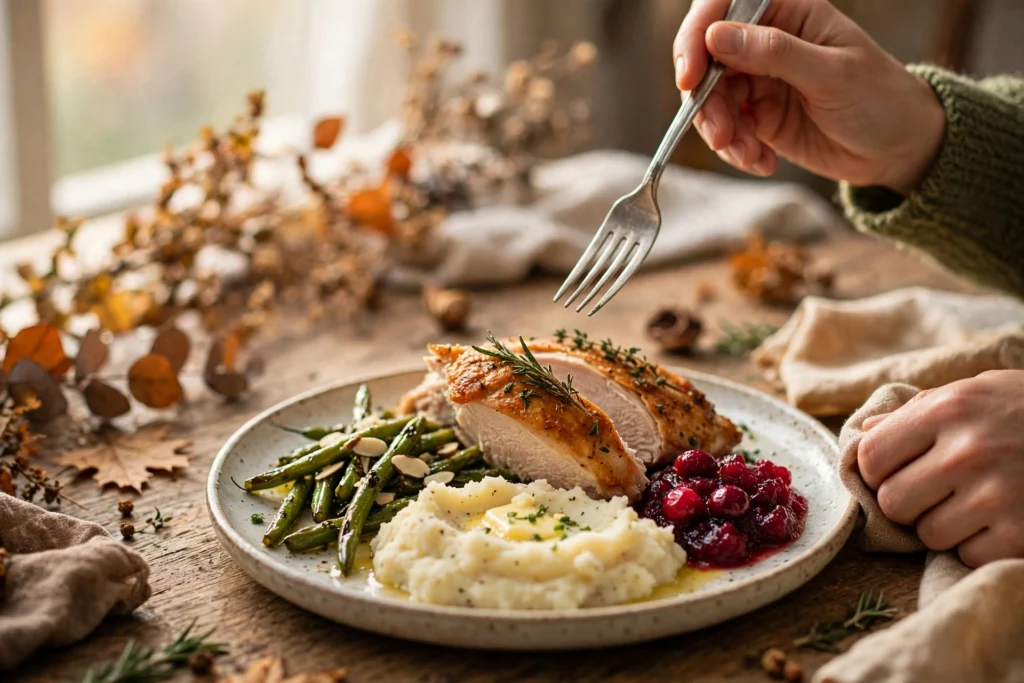
Most people do not arrive at Thanksgiving dinner mildly hungry. They arrive having skipped lunch, “saved room,” sampled three things while cooking, and then insisted they are starving anyway. That mix of appetite and anticipation makes the first bite land harder.
When you are hungry, food feels rewarding, not just pleasant. Your senses notice salt, fat, sweetness, warmth, and texture because they signal that energy has arrived. As you eat, that urgency fades, so the same flavor brings a quieter reward.
The Strange Fade Called Sensory-Specific Satiety
Psychologists have a name for the way one flavor loses its sparkle faster than food in general: sensory-specific satiety. It means the pleasure you get from a particular taste declines as you keep eating it, even while a different flavor can still tempt you.
That is why the fifth bite of stuffing may feel ordinary, but a spoonful of cranberry sauce suddenly wakes everything up again. Your mouth is not bored with eating. It is bored with that exact pattern of taste, texture, and aroma. A new flavor gives your brain a fresh signal to notice.
Thanksgiving is almost designed to trigger this effect. The table is full of contrasts: savory turkey, buttery potatoes, tart cranberries, sweet potatoes, crisp green beans, warm rolls. Each new flavor can briefly restart the “first bite” feeling, which is one reason a holiday plate can keep calling you back even when you are already full.
Memory Seasoning Is Real
The first bite also carries memory. Thanksgiving food is rarely just food; it is a recipe someone taught you, a dish that only appears once a year, a flavor connected to people who may or may not still be at the table. That emotional seasoning can make the first taste feel richer than anything a recipe alone could explain.
A familiar flavor can bring back the kitchen you grew up in or the person who always carved the turkey. Later bites carry some of that, but the first gets the full rush of recognition.
The First Bite Sets the Story, but the Last Bite Can Steal It
Here is the twist: the first bite may feel best in the moment, but the last bite can strongly shape how you remember the meal. If the final taste is warm, balanced, and satisfying, your memory of dinner tends to glow. If it is rushed, cold, or eaten while you are uncomfortably full, the whole meal can seem a little less magical in hindsight.
That is useful to know. You do not need a giant plate to enjoy Thanksgiving more. Smaller portions of the foods you love can preserve the pleasure instead of wearing it out. The goal is not to chase the first bite again and again. The goal is to notice it while it is happening.
How to Make the First Bite Count
Slow down for the first minute. Put your fork down after the first taste and notice the temperature, texture, and flavor before the table conversation pulls you away. That tiny pause helps your brain register the moment instead of letting it disappear into the meal.
Build contrast into your plate. A bite of something rich followed by something tart or fresh can renew your attention. And if there is one dish you wait for all year, do not bury it under everything else. Give it a clean first bite, the way you would give a favorite song your full attention when the opening notes begin.
Practical Takeaways
- The first bite feels best because hunger, anticipation, and attention all peak at the same moment.
- Sensory-specific satiety makes one flavor fade faster than your appetite for a different flavor.
- Thanksgiving’s mix of rich, tart, sweet, and savory dishes can keep restarting the “first bite” feeling.
- Memory adds emotional flavor, especially with once-a-year foods tied to family traditions.
- Smaller portions of favorite dishes can preserve pleasure better than piling everything on at once.


