

Why the Best Conversations at Thanksgiving Happen After Dinner, Not During It
Think back to your favorite Thanksgiving. Not the turkey, not the table setting — the moment. Chances are, the moment you are picturing did not happen at the dinner table at all. It happened afterward: on the couch with a mug of coffee, in the kitchen while the dishes soaked, on the porch with someone who finally said the thing you had been waiting all year to hear.
During dinner, everyone is performing a little. After dinner, everyone is just… there. And that is when the real Thanksgiving happens.
It is not an accident. Something shifts when the plates are cleared, and it changes the way people talk to each other — and once you notice it, you will start protecting that quiet hour like the treasure it is.
Dinner Is a Performance (Even When Nobody Means It to Be)
The Thanksgiving table is a stage. There are roles to play: the gracious host, the helpful guest, the relative who asks about your job, the one who tells the same story every year. Everyone is on their best behavior, passing dishes, minding manners, keeping the peace.
And because everyone is performing, the conversation stays on the surface. Work updates. Weather. The traffic on the way over. The food itself — how moist the turkey is, who made the cranberry sauce. Safe topics, delivered at a safe volume, while seven people talk at once.
Nobody is being fake. They are just being careful — and careful is the enemy of the honest conversation we actually came for.
The Dishes Are the Permission Slip
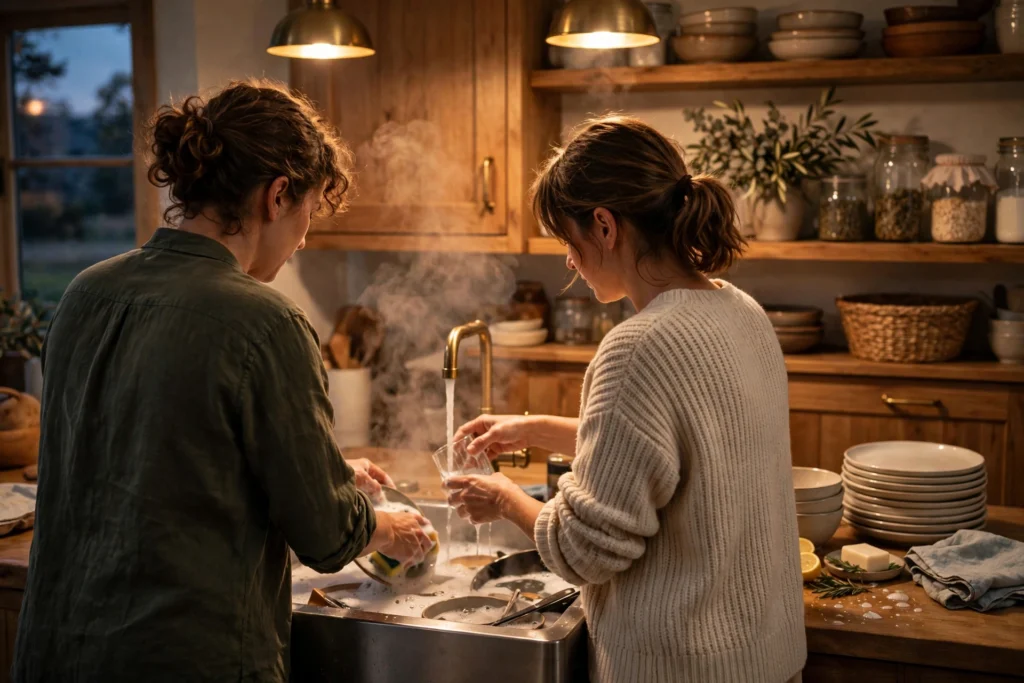
Then someone stands up with a plate. Then someone else follows. And the whole room exhales.
There is a reason the best talks start in the kitchen while the dishes are being done. Washing up gives people something to do with their hands, which makes it easier to say things with their mouths. Psychologists call this side-by-side conversation: when two people are not facing each other, the pressure of eye contact drops away, and honesty gets easier. It is the same reason the deepest talks with your kids happen in the car, and the best talks with your partner happen on a walk.
Standing shoulder to shoulder at a sink, nobody is performing. The turkey is done, the show is over, and the audience has gone home. The person next to you is just your sister, your dad, your old friend — and suddenly the question is not “how is work?” but “are you actually okay?”
The Food Coma Is Real — and It Helps
There is also a quiet bit of chemistry at work. After a big meal, your body shifts into rest-and-digest mode. Heart rate slows. Blood pressure dips. The stress hormones that kept everyone alert through the afternoon start to fade. It is the most relaxed most of us will be all year.
And relaxed people are honest people. The guard comes down not because anyone decided to lower it, but because a full stomach and a warm room did it for them. The uncle who argues about everything at dinner becomes, on the couch at 8 p.m., the uncle who tells you about the year he almost quit his job and started over. Same person. Different nervous system.
The People Who Stay Are the People Who Want to Talk
Here is the part nobody says out loud: after dinner, the room sorts itself. The people who are there out of obligation drift toward the door. The people who stay — the ones who linger over coffee, who offer to help with the dishes, who settle into the couch like they are not going anywhere — those are the people who came for connection, not just calories.
That is why the after-dinner conversations feel so much richer. The audience has narrowed to the people who actually want to be there, and everyone in the smaller circle knows it. There is no more performing for the whole family — just you, and the two or three people who stayed.
How to Protect the Best Hour of the Day
If the best part of Thanksgiving happens after dinner, then the best thing you can do this year is protect it. That means resisting the urge to rush the cleanup, to turn on a movie, to start the drive home while the food is still warm.
Linger. Make the coffee. Offer to dry the dishes. Ask the question you have been saving — the real one, not the polite one. “What was the hardest part of this year for you?” “What are you actually hoping for next year?” The people who stayed are ready for it. They stayed because they were.
And if you are the host, here is the secret: do not try to engineer the perfect dinner conversation. You cannot. The table is for the performance, and the performance is fine — it is tradition, and tradition matters. The real magic is the hour nobody plans. Just leave the coffee on, keep the couch free, and let the room do what it has always done when the plates are cleared.
Practical Takeaways
- Do not judge the day by dinner: the table is a performance, and the real connection usually starts after the plates are cleared.
- Volunteer for the dishes: side-by-side at the sink, without eye contact, is where the honest conversations hide.
- Linger on purpose: make the coffee, stay on the couch, resist the rush to leave — the best hour of Thanksgiving is the unplanned one.
- Ask the real question: after dinner, the people who stayed are ready for “how are you, really?” — not just “how is work?”
- Let the room thin out: the people who linger are the ones who came for connection, and the smaller circle is where the deeper talk lives.
- If you are hosting, protect the hour: keep the coffee on and the couch free, and let the after-dinner magic happen on its own.