
Why Your Phone Battery Dies Faster in Winter (and the Easy Fix)
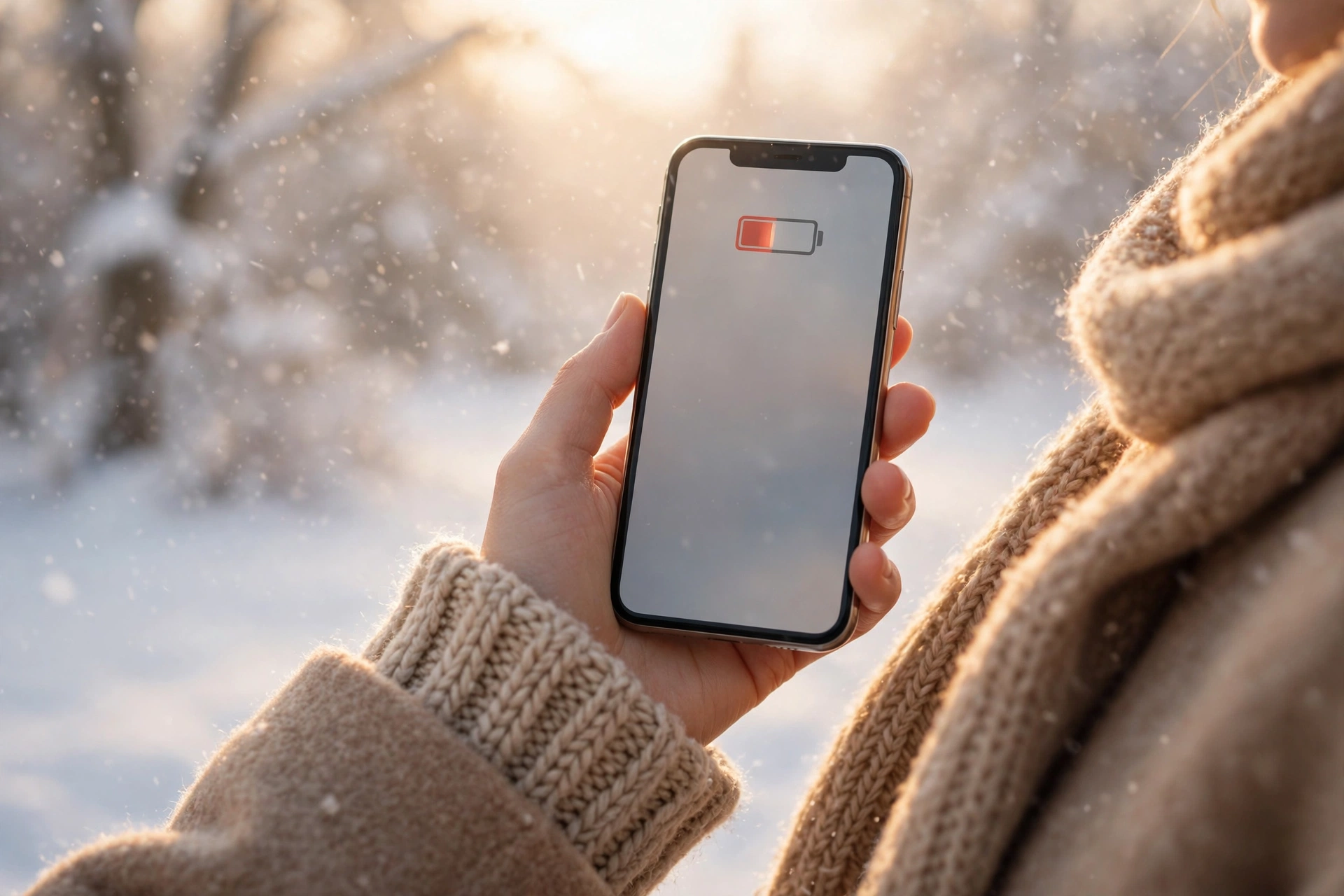
It is the coldest morning of the year so far. You unplug your phone at 100 percent, step outside to scrape the frost off the windshield, and by the time you have driven ten minutes, the battery is at 71 percent. You have barely touched it. You have not opened a single app. And yet a third of your charge has simply vanished into the cold air.
You are not imagining it, and your phone is not broken. Winter quietly steals battery life from every phone on the planet — and the fix is so simple that most people never think to try it.
Cold Does Not Drain Your Battery — It Freezes It in Place
Here is the surprising part: the cold does not actually use up your battery’s energy. It traps it. Inside every phone is a lithium-ion battery, and the power inside it moves through a chemical reaction. When the temperature drops, that reaction slows down dramatically, like honey thickening in a cold pantry. The energy is still in there. Your phone just cannot reach it fast enough.
So your phone does what any sensible device would do when it cannot get the power it needs: it panics. It drops the reported percentage, dims the screen, and in extreme cold it may shut itself off entirely — not because the battery is empty, but because the battery cannot deliver power quickly enough to keep the phone alive. Warm the phone back up in your pocket, and the battery percentage often bounces back up again, like a magic trick. The charge was never gone. It was just frozen out of reach.
Your Phone Is Tougher Than You Think — But Not That Tough

Phone makers generally design batteries to work best between about 16 and 22 degrees Celsius (roughly 60 to 72 Fahrenheit). Below freezing, performance starts dropping noticeably. At minus 10 degrees, some phones lose a quarter of their usable capacity within minutes. That is why your phone dies fastest on the days you need it most — waiting for a taxi in the snow, navigating an unfamiliar street in January, or filming your kids’ first snowman.
The cruel twist is that the phone itself generates heat when it works hard. So the worst combination is a cold phone doing a demanding job: GPS navigation in a freezing car, or video recording on a ski slope. The battery is already struggling in the cold, and then you ask it to sprint.
The Fix Is Embarrassingly Simple: Keep It Warm
The single best thing you can do for a phone in winter costs nothing: keep it close to your body. An inside jacket pocket beats a back pocket. A back pocket beats a bag. A bag beats a car dashboard, which is basically a freezer with a view. Your body heat is a free, always-on phone charger — not literally, but close enough in winter.
Before you head outside for a long stretch, charge your phone fully indoors, where it is warm. A phone that starts at 100 percent in a warm room has far more usable energy than one that started charging in a cold car. And if your phone does shut off in the cold, do not panic and do not plug it into a fast charger immediately. Let it warm up slowly to room temperature first. Charging a freezing battery can damage it permanently — the cold makes the inside of the battery vulnerable, and forcing power in too fast is the one thing that can turn a temporary problem into a lasting one.
A Few Winter Habits That Actually Help
Turn down your screen brightness before you go outside. The screen is the hungriest part of your phone, and in cold weather every bit of saved power matters twice as much. Switch on low power mode on bitter days; it is not just for emergencies, it is exactly what it was designed for. Close the apps you are not using, especially navigation and camera apps that keep working in the background.
And here is the one people forget: take your phone out of its case when you charge it indoors. A thick case traps heat while charging, and heat is the battery’s other enemy. Cold slows it down, heat wears it out. Room temperature is the sweet spot, always.
Practical Takeaways
- Keep your phone in an inside pocket — your body heat is the best winter battery saver there is, and it costs nothing.
- Charge fully indoors before going out — a warm, full battery survives the cold far better than a half-charged cold one.
- Never fast-charge a freezing phone — let it warm up to room temperature first, or you risk permanent battery damage.
- Use low power mode on bitter days — dim the screen, close hungry apps, and save your charge for when you actually need it.
- Take the case off while charging indoors — trapped heat wears the battery out, and winter is when it can least afford it.
- If your phone dies in the cold, warm it first — the charge is often still there, just temporarily out of reach.