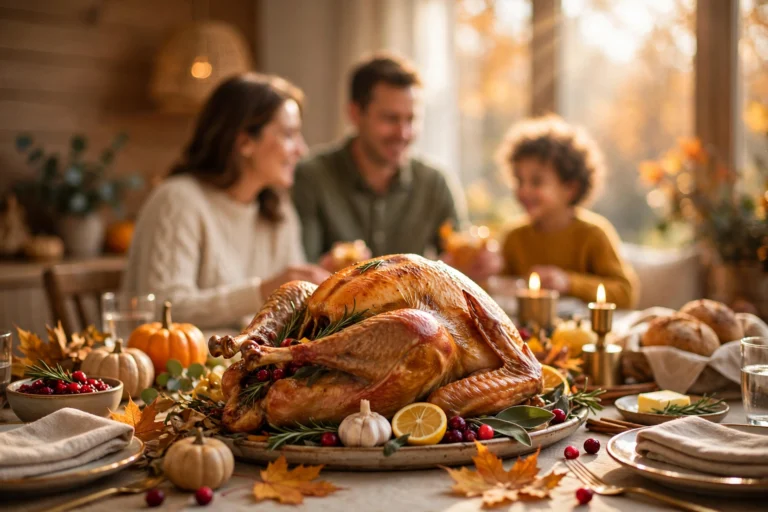

Why Your Thanksgiving Leftovers Taste Even Better the Next Day (and the One Mistake That Ruins Them)
It happens every single year. You sit down the day after Thanksgiving, open the fridge, and build a plate from what is left — cold turkey, a scoop of stuffing, some mashed potatoes — and somehow, impossibly, it tastes better than the feast itself did.
You are not imagining it. And you are definitely not the only one who has stood in front of an open refrigerator at midnight, eating cranberry sauce straight from the container, wondering why this is the best meal of the entire holiday.
There is real science behind why leftovers taste better the next day. There is also one very common mistake that quietly ruins them — the same mistake millions of people make every year without realizing it. Get the science right, avoid the mistake, and your Friday plate will beat Thursday’s dinner every single time.
Your Food Keeps Cooking After You Stop
Here is the secret most people never hear: flavor is not finished when the food comes out of the oven. It is only getting started.
When you cook turkey, stuffing, or gravy, heat breaks down proteins and fats into hundreds of tiny flavor compounds. But those compounds do not stay where they started. Overnight in the fridge, they keep moving — seeping slowly from the meat into the juices around it, from the herbs into the stuffing, from the drippings into the mashed potatoes. The flavors mingle, settle, and deepen in a way that no amount of extra cooking time on the day itself can match.
Scientists have a name for this: flavor maturation. It is the same reason chili, stew, and curry always taste better on day two. Your Thanksgiving plate is doing the same thing in miniature, in every container in your fridge.
There is a second effect at work too. When food cools and is reheated gently, some of the starches in potatoes and stuffing change their structure — a process called retrogradation. It sounds technical, but all it means is that the texture firms up and the flavors concentrate. That is why cold stuffing holds together so beautifully in a sandwich, and why reheated mashed potatoes can taste richer than the fresh batch did.
The Real Reason It Feels Better Is Not Just the Food

But chemistry is only half the story. The other half is you.
On Thanksgiving Day itself, you have been cooking for hours. You are tired, a little stressed, and probably still slightly full from all the tasting you did along the way. By the time you finally sit down, your senses are dulled — cooks famously enjoy their own food less, because they have been smelling it for hours.
The next day, everything is different. You are rested. You are hungry again. There is no pressure, no timing, no performance. You eat standing at the counter in your socks, building exactly the plate you want, with no one watching and no dishes to impress. Food always tastes better when you are relaxed — and there is nothing more relaxed than a Friday afternoon with a plate of leftovers and nowhere to be.
This is also why the turkey sandwich has become a holiday tradition of its own. It is not just a way to use up the bird. It is the most honest meal of the whole weekend: no ceremony, no expectation, just good food eaten exactly the way you like it.
The One Mistake That Ruins Them
Now for the mistake. It happens in almost every kitchen, every year, and it is so ordinary that nobody thinks twice about it.
People leave the food sitting out on the counter — or worse, on the table — for hours after dinner while everyone talks, plays games, and slowly drifts away from the table. The turkey cools on the platter. The stuffing sits in its dish. The gravy congeals in the boat. And all the while, the clock is ticking.
Here is the rule that matters: cooked food should not sit at room temperature for more than two hours. After that, bacteria start multiplying fast — and no amount of reheating the next day fully fixes food that spent the night in the danger zone. The flavors may survive, but the food is no longer safe in the way you want it to be.
The fix is almost embarrassingly simple: pack the leftovers up within two hours of serving, while you are still clearing the table. Shallow containers, not deep ones, so the food cools quickly and evenly. And here is the part most people skip — label them. A strip of tape and a pen takes ten seconds, and it saves you from the annual mystery-container guessing game three days later.
How to Reheat Like You Mean It
Even perfect leftovers can be ruined in the last five minutes. The microwave is fast, but it is also the fastest way to turn beautiful turkey into dry cardboard.
The trick is moisture. When you reheat turkey, add a splash of broth or a spoonful of gravy before it goes in the microwave, and cover the plate loosely. The steam keeps the meat tender instead of turning it tough. For stuffing and mashed potatoes, a tiny bit of butter or a drizzle of milk does the same job.
And if you have the patience, the oven is even better. A few minutes at a moderate temperature, covered in foil, brings everything back almost exactly as it was — sometimes better, thanks to that overnight flavor magic.
Practical Takeaways
- Leftovers genuinely taste better the next day — flavors keep mingling and deepening overnight in the fridge, the same reason chili and stew improve on day two.
- Cold, rested food reheats beautifully because starches firm up and flavors concentrate — that is why the turkey sandwich is a tradition, not just a chore.
- Part of the magic is you: you are rested, hungry, and relaxed the day after, with no cooking stress dulling your senses.
- Never leave cooked food out for more than two hours after serving — pack it into shallow containers while you are still clearing the table.
- Label every container with the date so nothing becomes a mystery three days later, and eat refrigerated leftovers within three to four days.
- Reheat with moisture: a splash of broth on turkey, a little butter in the potatoes, and a loose cover in the microwave — or use the oven, covered in foil, for the best result.