

Why Your Child’s Imaginary Friend Might Be the Smartest Thing About Them
Your four-year-old has just introduced you to someone new. His name is Captain Biscuit. He is seven feet tall, invisible, and apparently allergic to broccoli. He needs his own seat at dinner, his own bedtime story, and — this is non-negotiable — he gets the window seat in the car, every single time.
Your first instinct is to smile politely and wonder, just a little, whether you should be worried.
Here is the truth that surprises almost every parent who hears it: an imaginary friend is not a warning sign. It is a milestone. The child who invents a whole person out of thin air — name, personality, preferences, and a grudge against broccoli — is showing off one of the most powerful skills a human brain ever develops. Once you understand what is really happening, you will never look at Captain Biscuit the same way again.
The Brain Is Practicing Being Human
Think about what it actually takes to invent a friend. Your child has to imagine a mind that is not their own. They have to decide what this other person likes, what they are afraid of, what they would say in a tricky situation. Then they have to hold a conversation with that person — playing both sides — without losing track of who said what.
Psychologists call this “theory of mind,” and it is the foundation of empathy, friendship, negotiation, and basically every relationship your child will ever have. Children with imaginary friends tend to score higher on it. They are not confused about reality. They are rehearsing it.
That is why researchers who study this are so calm about it. In study after study, children with imaginary companions show stronger language skills, better emotional understanding, and more creative problem-solving than their peers. The friend is not a substitute for real friends. It is a training ground for them.
Why the Friend Always Knows Exactly What to Say
Pay attention to what the imaginary friend says, and you will notice something remarkable. The friend almost always says the things your child is not quite ready to say themselves.
When your daughter is nervous about starting school, her friend is nervous too — and together they talk through it. When your son is angry that his little sister broke his toy, his friend is furious on his behalf, which lets your son explore the anger without actually shouting at anyone. When your child is lonely, the friend shows up right on cue.
The imaginary friend is a safe place to park big feelings — a rehearsal partner who never judges, and a way of saying “I am scared” or “I am angry” without having to own those feelings out loud just yet.
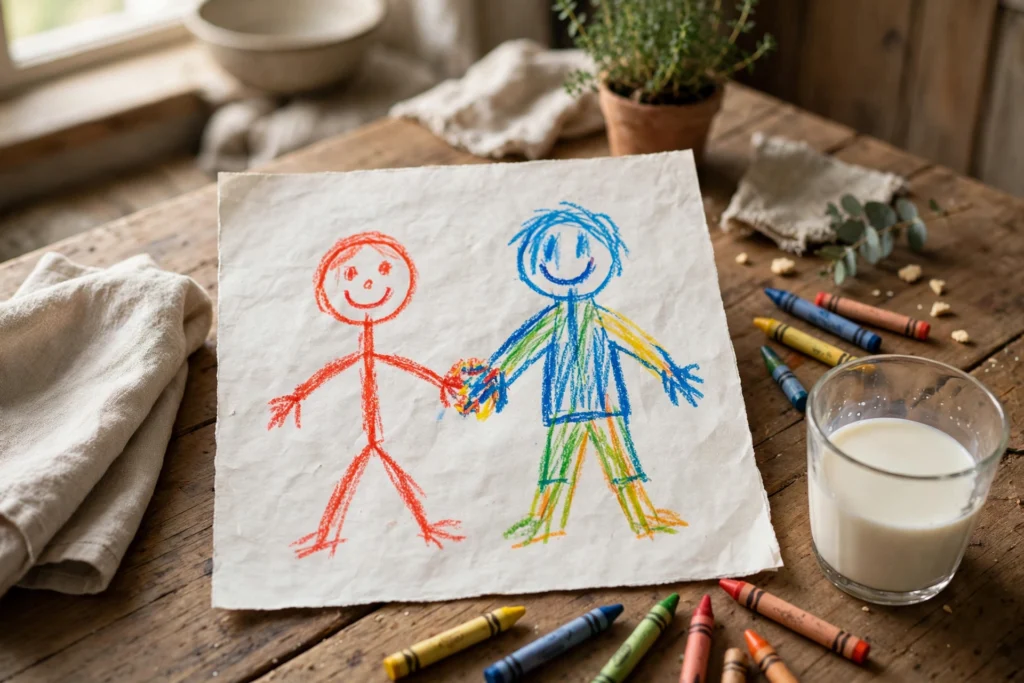
The Friend Who Takes the Blame
Of course, there is a catch — and every parent of an imaginary-friend child knows it. The friend also eats the last cookie. The friend draws on the wall. The friend definitely, absolutely, 100 percent broke the vase, and your child is shocked you would even suggest otherwise.
This is the part that makes parents groan, but it is actually the most interesting part of all. To blame the friend, your child has to understand cause and effect, responsibility, and consequences — and then deliberately construct a story that shifts them somewhere else. That is advanced thinking, even if it is being used to dodge a scolding about a vase.
The trick is not to play detective. Calmly hold the line — “In this house, whoever was holding the vase helps clean it up, even if they are invisible” — and move on.
When the Friend Quietly Moves Out
Here is the part nobody warns you about: one day, the friend just stops coming around. There is no goodbye party, no dramatic farewell. Your child simply stops setting a place for Captain Biscuit at dinner. The window seat is just a seat again. And you feel a strange little ache, because a whole person has left your house and nobody even noticed.
That is normal, and it is healthy. Most imaginary friends fade between the ages of five and seven, right around the time real friendships get more complex, and the brain no longer needs the rehearsal partner as much. The skills stay. The friend goes.
There is nothing to fix — but do write it down. The name, the allergies, the window seat rule. In ten years, when your teenager rolls their eyes at everything you say, you will want to remember the kid who once introduced you to a seven-foot invisible captain.
Practical Takeaways
- Treat the imaginary friend with respect, not alarm: most children with imaginary companions are developing stronger language, empathy, and creativity, not struggling.
- Listen to what the friend says — it often reveals what your child is feeling but cannot say directly yet, from school nerves to sibling jealousy.
- Join the game lightly (a spare plate, a greeting) but do not let the friend become a permanent excuse; hold the same boundaries you would with any child.
- Never use the friend as a threat or a punishment (“Captain Biscuit is going away if you don’t behave”) — it turns a healthy coping tool into a source of anxiety.
- Expect the friend to fade naturally around age five to seven; no intervention is needed, and forcing a goodbye can make your child cling harder.
- Write down the details — name, quirks, rules — while they are fresh; they become one of the sweetest family stories you will ever tell.